
Westland Previous Residents by Era
For past residents, begin with the era rather than the name. The modern parcel card and the Wayne County land index establish the legal trail. Regional street directories and the Westland Observer can add dated household or community context. Older county, archive, and library routes fill gaps when the online index ends. The table separates the evidence types so a past owner is not mislabeled as a directory presence, and a newspaper mention is not treated as a full address history.
| Source | Years it covers | Where held | What it shows |
|---|---|---|---|
| Wayne County land index | County page says January 1, 1960 onward; confirm current access | Current Wayne public search and Register of Deeds | Grantor, grantee, instrument, recording date, and a route to the recorded record |
| Older deed files | Before 1960 or unindexed material | Register of Deeds in Detroit, mail search, and kiosk route | Older instruments and legal-description research |
| Bresser West Wayne County lead | 1961-1977 and 1979-1996 | Henry Ford Centennial Library lead | Street, house number, first-listed household, phone, and movement clues where the edition includes Westland |
| Polk Western Wayne County lead | 1996-1997 and 1998 | Regional holding lead | Name, street, phone, and classified sections; verify Westland coverage |
| Westland Observer pages | Visible library links include 1982, 1983, 1988-2000, and 2005-2022 | Westland Public Library | Dated local news, events, obituaries, places, and addresses when printed; some issues may be missing |
| Burton and county archive leads | Series-specific, not a complete Westland index | Detroit Public Library, Archives of Michigan, and partner routes | Land, probate, naturalization, census, death, marriage, and newspaper research leads |
For a modern date, start with the parcel and the deed index. For a date that falls outside a recorded transfer, search a directory year, newspaper issue, or archive series for supporting context. Record a gap plainly. The research did not identify a complete Westland directory run or a city-complete historic household list.
Westland Parcel Details Start History
Westland Assessment and BS&A provide the stable starting point for a prior-residents search. Enter the number portion of the current address, choose the correct street if several choices appear, and record the parcel number in the city's spaced format. Save the legal description, property address, map link, any owner or taxpayer label, tax-year date, sale history, and building-record count only when those fields are displayed. The legal description and parcel number are often more dependable than an older street label because a street address can be reformatted, omitted from an instrument, or linked to a later parcel split or merger.
Next, open the Westland tax-map viewer and compare parcel geometry, labels, and available layer dates. The GIS result is a helpful bridge to the deed trail, not title proof. When a historic document does not match a current number, preserve the older spelling, lot, block, subdivision, and township reference. Do not assume that a modern Westland address is a direct translation. No verified Westland renumbering ledger was located, so a specific public request to Assessment, Planning, or the Clerk is the appropriate fallback when the land description alone does not resolve the address.
Note: Record the property, owner, taxpayer, and mailing labels exactly as displayed because they can refer to different relationships.
Wayne Deeds Trace Westland Previous Residents
The deed chain follows land transfers, not a guaranteed list of who lived at the address. Start with the current parcel and legal description, then use the Wayne County grantor-grantee index to locate the recorded transfer into the current grantee. Work backward one matching instrument at a time. Keep the legal description, recording date, instrument number, and type beside each name. A mortgage, release, assignment, lien, easement, or affidavit can name people without transferring title, so it should not be entered as a prior-owner link.
- Collect the current Westland parcel number, property address, and legal description from Assessment or BS&A.
- Search the current grantee or displayed owner in the Wayne County land index and match the result to the legal description and parcel reference.
- Record the instrument number, type, execution or recording date, grantor, and grantee. Treat the recording date and execution date as separate date layers.
- Use the prior grantor's acquisition as the next backward search, testing surname order and entity, trust, or estate variants when the portal permits.
- For an older or unavailable image, request a named instrument by mail, use the Detroit office or kiosk, or ask staff to search the legal description. Retain every office response in the evidence ledger.
- Grantor
- The party transferring an interest in a recorded instrument.
- Grantee
- The party receiving an interest in that recorded instrument.
- Chain of title
- The linked sequence of recorded land transfers, checked instrument by instrument against the same land description.
- Legal description
- The lot, block, subdivision, metes-and-bounds, parcel, or township description that identifies land more reliably than a changing street label.
The Wayne County Register of Deeds search-services page describes the public search, copy, office, and mail routes. Current fees should be confirmed with the office before payment.
Westland Previous Residents Need a Cutoff Check
Wayne County's current search-services page describes indexed land records back to January 1, 1960. Legacy copy language describes a different post-1986 online limitation. The research could not reconcile those statements into one universal online cutoff, and the live public-search field view was not fully accessible. Treat the county's current statement as the starting point, then confirm the portal's present index and image availability for the particular date and instrument before stating that an older deed is online.
The practical fallback chain is clear even when the cutoff is not. Search the online grantor-grantee index first. If a desired image is not displayed, use the Register of Deeds copy route. If the material predates the online range or is an unindexed series, submit a focused mail request with the address and legal description or visit the Detroit office and kiosk. Ask for a particular instrument or a legal-description search rather than a broad compilation of names. That route also avoids mixing a land-record gap with a claim that no earlier history exists.
Note: An alert or index entry is a pointer to a recorded instrument, not a title determination or a complete address history.
Westland Previous Residents Before 1966
Westland's historical record geography carries a major label change. Nankin Township became the City of Westland on May 16, 1966. Earlier land, probate, court, tax, newspaper, church, census, and directory evidence may therefore use Nankin Township or Wayne County rather than Westland. The legal parcel can continue across the city-formation date even when the municipality name changes. Search all documented labels and preserve the original label in the research ledger rather than silently replacing it with a modern name.
The Westland Historical Commission has a mandate to collect and preserve Westland and Nankin Township materials.
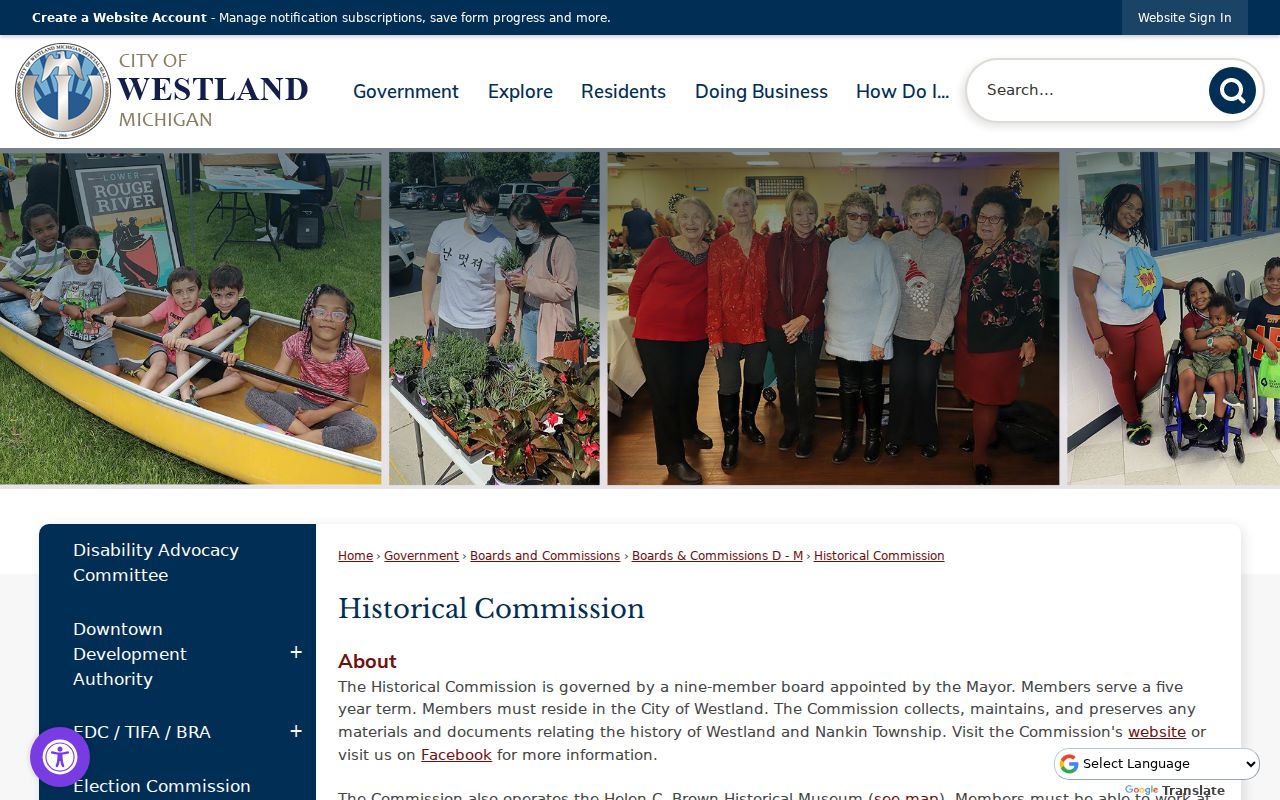
That shared remit makes the commission a useful office contact when a pre-1966 street, institution, or place name needs context. Norwayne, Nankin Mills, Perrinsville School, and Westland Historic Village Park are also useful local search anchors, but none of them proves an address connection on its own.
Westland Directories Pair Names With Dates
Past households require a second trail beyond land ownership. Bresser criss-cross directories are arranged by street and house number and can include a first-listed household name, telephone, ownership status, first year listed, or move clue. Polk directories can use surname, street, phone, and classified sections. Those are publisher-dependent features, not guarantees for every Westland address. The Library of Michigan directs researchers to its ANSWER catalog, print shelves, microfilm room, Ancestry Library Edition, and HeritageQuest; a library counter or staff route is appropriate when a desired volume is not online.
- Place the deed recording date and legal description on a timeline.
- Choose directory editions that bracket the transfer, then copy the exact edition, page or image, street line, and first-listed name.
- Compare the directory date with census-era evidence, including the Burton Collection's Wayne County research leads, without treating a census or directory as the same record type.
- Check the Westland Observer date by date for an address, place, obituary, organization, or event reference. Preserve the issue date and page because OCR can be unreliable.
- Label the result as recorded owner, taxpayer mailing field, directory presence, newspaper mention, or census-era evidence. Leave a relationship unresolved when the dates or geography do not align.
The historical volumes are explored more fully in the Westland City Directory. For a missing Westland issue or directory, contact Westland Public Library with a narrow title, year, date, street or name, and desired format. The library research desk is listed at 734-326-6123.
Westland Previous Residents in Archives
Archives can supply endpoints and context that a land index cannot. The Burton Historical Collection holds books, manuscripts, maps, newspapers, photographs, family histories, church and military material, and land records. Its selected Wayne resources include death-index series for 1934-1953, marriage and land-transfer leads, probate estate packets, naturalization records, an 1884 Michigan census for Wayne County excluding Detroit, and telephone-directory leads. These are research paths, not a complete Westland address register. Search the published series, then keep the archive citation and date beside any result.
The Detroit Public Library Burton Historical Collection is the regional source for those archival paths.
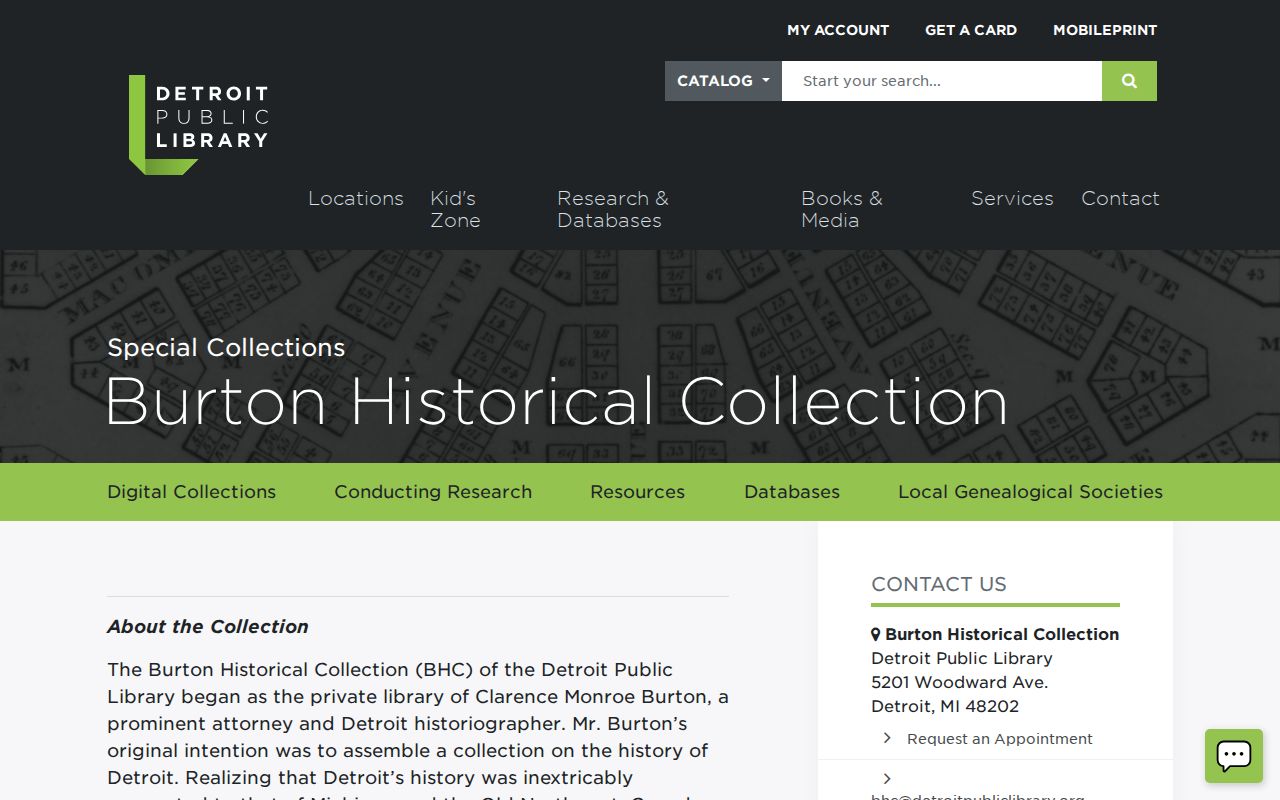
Burton lists 5201 Woodward, Detroit, MI 48202, 313-481-1401, and bhc@detroitpubliclibrary.org; appointment and staff assistance are recommended. Wayne County archive series also route through the Archives of Michigan, NARA, and Detroit partner collections. Use those counter, office, and library channels when the online directory or recorder search leaves a dated gap.
Westland Previous Residents and the Sanborn Gap
Sanborn fire-insurance maps can be useful for building materials, lot context, and street layout in places where a verified sheet exists. The Library of Congress collection and Michigan metadata were checked for Westland, but the research did not find a clearly labeled Westland Sanborn item, year, or sheet. Wayne County results appeared for places such as Belleville, Dearborn, Detroit, and Trenton. Those maps should not be substituted for a Westland address.
Use the Library of Congress and Library of Michigan catalog paths as a search lead, then record a verified title, city, year, and sheet only if one is found. Until then, the Westland tax map, legal description, plat references, historic directory street lines, and Nankin Township labels are stronger local route markers. An honest gap is better than a map claim that the available research does not support.
Westland Previous Residents Need Clear Labels
Use three clear labels in every Westland address history: prior owner for a recorded land transfer, directory presence for a dated printed entry, and address occupant only where a source actually supports physical presence for that period. A property owner, taxpayer, mailing recipient, directory entry, and address occupant can differ. A directory may list a first-named household member; a deed may omit occupants; an obituary may mention a family connection without showing a street. These distinctions keep a plausible story from becoming an unsupported claim.
Lawful use. Use Westland house-history and family-history records responsibly. Do not pursue a protected address or use historical findings to stalk, harass, intimidate, or harm any living person.
Michigan's Address Confidentiality Program can use a designated address, and restricted voter, vital, court, and vehicle fields must not be reconstructed. When a source is redacted, missing, or contradictory, preserve the gap, source date, and custodian route. That is the soundest way to trace past residents without making a claim that the record does not prove.